Why This Knicks–Pistons Line Punishes Lazy Bettors
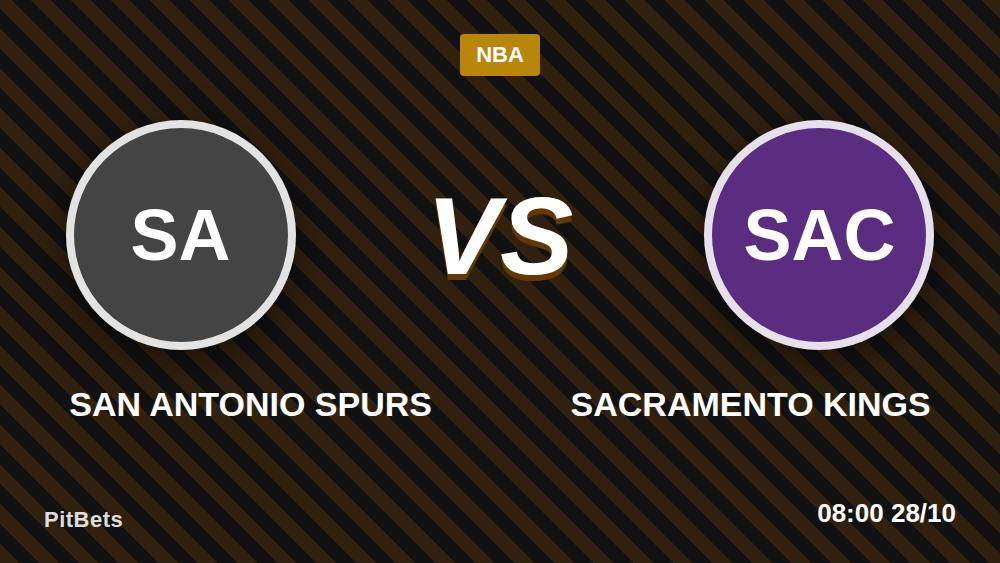
Madison Square Garden, October 28, 2026, tip-off at 8:00 AM Manila time on the 28th — that early-morning slot is exactly where bad habits get expensive. The Knicks are home favorites at -4.5, the total sits at 219.5, and on paper it looks like the easiest board of the week. That is the trap.
Early-season NBA lines are the least efficient lines of the entire calendar. Rotations are still being sorted, minutes are being capped, and coaches are openly treating the first two weeks as an extension of preseason. Books know this, which is why the juice on these games is often shaded tighter than the number suggests. The table above lays out the raw fixture; what it does not show is the five decisions that separate a bettor who grinds a steady bankroll from one who reloads by Thursday.
We have seen this exact matchup profile dozens of times: a well-coached Eastern Conference contender hosting a young, athletic team that wants to run. The result is usually close for three quarters and then decided by one or two possessions. That is precisely the kind of game where process beats gut feel. Here is what to avoid.
| Info | Detail |
|---|---|
| Competition | NBA |
| Kick-off | 08:00 28/10/2026 (GMT+8) |
| Venue | Madison Square Garden |
| New York Knicks form | - |
| Detroit Pistons form | - |
| Reference odds | NY -4.5 |
| Over/Under | 219.5 |
Mistake 1: Treating -4.5 as a Free Number Because It's Under a Touchdown
The single most common error we see from new depositors is assuming any spread under five points is basically a pick'em. It is not. In the NBA, a 4.5-point line means the bookmaker expects a two-possession game in the final minute — and that means free throws, fouls, and garbage-time threes decide your ticket, not the quality of either team's first quarter.
Against a Detroit side built to push pace, a 4.5-point cushion can evaporate in 40 seconds of live play. If you take New York at -4.5, you are not betting on the better team. You are betting on the Knicks winning by at least five in a game where the Pistons will likely keep it within one score deep into the fourth.
What to do instead: decide whether you actually want the favorite, or whether you want the margin. If your read is "New York wins but Detroit hangs around," the moneyline at roughly -190 to -200 is the cleaner expression of that opinion, even at the shorter price. And if you are buying the half-point to -4, understand the cost — most Philippine-facing books charge 10 to 15 cents of extra juice for that move, which is only worth it when the number is sitting on a key digit like 3 or 7. Four-and-a-half is not a key digit.
Rule of thumb: never pay more than 12 cents to buy a half-point unless you are crossing 3, 4, or 7.
Mistake 2: Hammering the Total Before You Know Who's Suiting Up
A 219.5 total is a modern, pace-friendly number, and the instinct is to smash the over because both teams like to get up and down. Slow down. In late October, the injury report is the single most valuable piece of information on the board, and it drops roughly 24 hours before tip-off.
One starting big man ruled out does two things at once: it removes rim protection (pushing the over) and it removes a low-post scorer who generated efficient half-court points (pushing the under). Those effects do not cancel out neatly. Sharps do not touch a first-two-weeks total until the final injury designation is posted, and neither should you. If you must bet early, size it at half your normal stake and treat it as a position, not a conviction play.
Also watch the rest factor. A team playing the second night of a back-to-back in the season's opening stretch will often see its defensive intensity fall off a cliff in the third quarter while its shooting legs go with it. That combination has historically produced more unders than overs in the 210–225 range, because tired teams miss shots faster than they give up easy baskets.
Practical step: set an alarm for the official report, compare it against the line movement, and only fire if the number has not already moved against you by more than a point and a half.
Mistake 3: Chasing the Live Line After a Cold First Quarter
This is the mistake that empties accounts fastest, and it is worse on a game with an 8:00 AM Manila tip. You wake up, the Knicks are down 21–14 after one, and the live spread has ballooned to -9.5 with a juiced price. It feels like free money. It is not.
Live markets at MSG are among the sharpest in the league because volume is enormous and the in-arena feed is fast. By the time your app refreshes, the number you saw has already been repriced twice. Books also widen live margins on NBA quarters to between 6% and 9% of the stake in effect, versus 4% to 5% on the pre-game side, so even a "correct" read has to overcome a bigger toll.
The disciplined play on a slow start is a second-half or quarter market, not a chase on the full-game number. If New York trailed by seven at the half, the second-half line typically resets near -3.5 to -4 for the Knicks with the total repriced into the 108–112 range. That is a cleaner bet than paying a bloated full-game number that already absorbed the bad quarter.
And if you use a local book running a live-bet bonus — for example a 25% profit boost capped at ₱2,000 with a 5x turnover requirement on odds of 1.60 or higher — read the rollover before you fire. Boosts on live markets are frequently excluded from wagering contribution. Check the terms tab, not the banner.
Mistake 4: Ignoring How Your Book Settles and Pays
You can handicap this game perfectly and still lose money on the operational side. Before you deposit for a Knicks–Pistons ticket, confirm four things: the licence, the minimum deposit, the withdrawal window, and the VIP ladder.
On the licensed Philippine-facing side, PAGCOR-regulated operators display a licence number in the site footer — typically a format beginning with the year and a six-digit registration, and it should match the entity named in the terms. Offshore books operating under a Curaçao eGaming master licence (commonly 8048/JAZ or similar) are also widely used, but the redress path is slower. Neither is automatically a problem; not knowing which one you are on is.
- Minimum deposit: ₱100 to ₱500 is standard across the major local-facing brands; anything demanding ₱1,000 to open an account is an outlier.
- Withdrawal processing: GCash and Maya cashouts at licensed local books clear in 5 to 30 minutes; bank transfers run 1 to 3 business hours; offshore books average 24 to 72 hours and often require one completed KYC cycle first.
- Welcome bonus: a 100% match up to ₱5,000 with 10x turnover on odds of 1.50+ is the market norm. A 200% match sounds better until you read the 30x rollover and the 1.30 minimum-odds clause.
- VIP tiers: most programs start at ₱50,000 lifetime wagering (Bronze), step to ₱250,000 (Silver) and ₱1,000,000 (Gold), with the real value appearing at Platinum — faster payouts, higher live limits, and a dedicated host.
None of that matters if you learn it after you try to cash out at 9:00 AM with the game already settled.
Mistake 5: Betting the Name Instead of the Situation
The Knicks are the bigger brand, the bigger market, and the team casual bettors default to. That is a bias, not an edge. Detroit's young core has spent two seasons learning to defend the pick-and-roll at NBA speed, and athletic young teams routinely cover double-digit spreads at the Garden in October because the home crowd does not yet have its voice.
Before you finalize anything, run the same four-question checklist we use on every early-season board: Who is on a back-to-back? Who is missing a starter? Which team has a coaching staff that shortens its rotation in the fourth quarter? And has the line already moved — because if the opener was -3.5 and it now sits at -4.5, the value on the favorite has largely been extracted.
Bankroll discipline closes the loop. Flat-stake 1% to 2% of your roll per play in October; save the 3% to 5% units for games where you have both injury clarity and a line that has not yet adjusted. And set a hard pre-game cap — once the ball goes up, the best bet you can make on this fixture is often no bet at all.
Use the table above to log your opening line, then track how it moves in the final two hours. That habit alone will tell you more about where the sharp money sits than any tipster thread ever will.